What Should You Look for in Personalized Coffee Packaging?
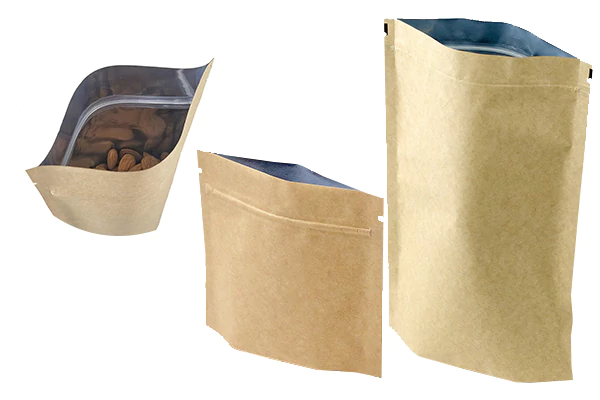
Personalized coffee packaging should be judged by how well it protects roasted coffee, fits the filling process, communicates product information, and works after repeated opening. Roasted coffee releases substantial CO₂ after roasting while oxygen and moisture can shorten freshness, so barrier films, one-way valves, seal quality, and zipper performance matter more than decoration alone. In a 250 g retail format, even a 10–20 mm dimensional change can affect headspace, carton fit, and filling speed. Buyers should also compare minimum order quantities, print methods, food-contact documentation, recycling instructions, and transport performance before approving production.
Roasting changes coffee from a stable green seed into a porous product that releases gases and reacts more readily with its surroundings. Research published in Scientific Reports in 2017 examined post-roast coffee degassing and found that roast degree, bean structure, and storage conditions influence how quickly CO₂ leaves the beans. A package therefore has to manage gas release without giving outside oxygen an easy route into the coffee.
That requirement makes material selection more important than film thickness alone. A 100-micron pouch is not automatically more protective than a thinner multilayer structure because oxygen and water-vapor transmission depend on the polymers, coatings, adhesives, and barrier layers used. Ask a supplier for OTR and WVTR data under stated temperature and humidity conditions instead of accepting descriptions such as “high barrier.”
A barrier specification without its test conditions is incomplete. OTR measured at 23°C and a stated relative humidity cannot be compared casually with a figure produced under different laboratory conditions.
Oxygen control deserves particular attention because roasted coffee contains aroma compounds and oils that change during storage. A 2014 review in Food Research International described hundreds of volatile compounds associated with roasted coffee aroma, while only a portion strongly influences what people smell in the cup. Packaging cannot stop chemical change indefinitely, but limiting oxygen, moisture, heat, and light can slow unwanted deterioration.
The next question is how the package handles CO₂. Coffee may continue degassing for days after roasting, so sealing recently roasted beans inside a package with no suitable gas-management method can cause the bag to expand. One-way valves are common on whole-bean coffee because they allow internal pressure to escape while restricting outside air entry.
Valve performance should be assessed together with packing time rather than as a decorative feature. If a roastery fills 1,000 bags per shift, even a small problem with valve placement can interfere with sealing, labels, graphics, or automated handling across the entire run. Request the valve specification, installation location, opening-pressure information when available, and confirmation that it is compatible with the chosen film structure.
Once gas management is established, dimensions become easier to evaluate. A bag sold as a “250 g coffee pouch” describes a nominal application, not a guaranteed fit for every 250 g coffee. Darker roasted beans can occupy a different volume from denser light-roasted beans, while ground coffee settles differently again.
A useful sample test is simple:
-
Fill at least 10–20 sample bags with the actual coffee and target net weight.
-
Record remaining headspace after normal settling.
-
Heat-seal each bag using the intended production equipment.
-
Open and reseal the zipper repeatedly.
-
Place filled bags in the intended shipping case rather than judging empty samples.
A 10 mm change in gusset depth may appear minor on a technical drawing but can alter standing stability and case packing when repeated across 12 or 24 units. Package development should therefore use filled samples, because an empty pouch provides little information about its final shape.
Bag format comes next. Stand-up pouches offer a broad front panel and are widely used for 200–500 g retail products, while flat-bottom and side-gusset formats provide different filling openings, shelf footprints, and printable areas. The best format depends partly on whether operators fill manually or equipment performs filling and sealing.
Manual packing makes opening width especially noticeable. Saving only 2 seconds while filling each package amounts to roughly 33 minutes across 1,000 bags. At 5,000 bags, the same difference becomes about 2.8 labor hours, so a pouch that is slightly cheaper per unit can cost more to use if operators repeatedly struggle to open or position it.
Customer handling starts where production handling ends. Resealable zippers are useful only when customers can operate them reliably after the original top seal has been removed. The distance between the tear notch, zipper, and heat seal should leave enough material for a clean opening without cutting into the closure.
Testing 20 finished samples is more informative than opening one approval sample. Open and close each pouch 20–30 times, add normal handling pressure, and note zipper separation, film wrinkling, seal damage, or coffee particles caught in the closure. A customer drinking one 15 g dose per day could open a 250 g bag roughly 16 times before it is empty.
Print design should then be reviewed at physical size. A 250 g pouch offers limited viewing distance, and information competes with folds, valves, zippers, gussets, seals, and legally required text. Brand name, coffee name, origin, roast information, net quantity, and preparation information should not receive identical visual emphasis.
For specialty coffee, variable information can include:
| Printed field | Why buyers use it | Typical format |
|---|---|---|
| Origin | Identifies sourcing location | Country, region, farm |
| Process | Describes post-harvest method | Washed, natural, honey |
| Variety | Distinguishes coffee type | Bourbon, Caturra, Gesha |
| Roast date | Helps customers judge age | Date or batch code |
| Tasting notes | Sets flavor expectations | Usually 2–4 descriptors |
| Net quantity | Supports sale and compliance | g, oz, or both where appropriate |
A design containing six information fields still needs enough blank space for fast reading. Print proofs should be viewed at 100% scale rather than enlarged on a monitor, because 6-point text that looks acceptable at 200% zoom can be uncomfortable on the finished pouch.
Color deserves similar physical testing. Flexible films can contain white ink layers, transparent areas, metallized layers, matte varnishes, or gloss finishes, and each changes how printed color appears. A digital PDF cannot reproduce all of those material effects accurately.
Request a physical proof when brand-color consistency matters, particularly before ordering 10,000 or 50,000 units. Compare the proof under normal retail lighting and daylight, inspect small reversed text, and check registration around fine lines. Production tolerances should be agreed with the printer before artwork approval rather than after finished bags arrive.
Print method also affects purchasing quantities. Digital printing is often suitable for smaller runs and multiple designs because it does not rely on the same plate or cylinder setup used by several conventional processes. Flexographic and rotogravure production can become economical at higher volumes, but setup requirements vary substantially by converter, number of colors, dimensions, and structure.
Consider a brand selling eight coffees rather than one. An order of 40,000 bags sounds large, but splitting it evenly creates only 5,000 units per design. If two coffees change every season, unused printed stock can remain after the product has disappeared, so unit price should be compared with the amount of packaging the business can realistically consume before artwork changes.
A mixed packaging system can reduce that issue. High-volume blends can use fully printed pouches, while seasonal lots can use a standard branded pouch plus a variable label. A roaster changing 12 microlots per year may otherwise need 12 separate printed inventories, each with its own minimum quantity and storage requirement.
Material choice adds another purchasing question because environmental claims are not interchangeable. “Recyclable,” “compostable,” “bio-based,” and “made with recycled content” describe different properties, and actual disposal routes vary by country and local collection system. Buyers considering sustainable stand up pouches should request the complete material structure and disposal instructions rather than relying on the front-of-pack wording.
European packaging requirements are also changing. Regulation (EU) 2025/40 on packaging and packaging waste entered into force in 2025 and applies from August 2026, with provisions covering recyclability, labeling, material use, and packaging reduction on phased timelines. Coffee businesses selling in European markets should therefore review packaging specifications with suppliers and compliance professionals rather than assuming a package approved several years ago remains suitable indefinitely.
Food-contact documentation belongs in the same supplier review. Regulation (EC) No 1935/2004 sets the general framework for food-contact materials in the EU, while Commission Regulation (EU) No 10/2011 covers plastic materials and articles intended to contact food. Buyers should obtain documentation appropriate to the actual laminate, inks, adhesives, and intended food-contact application.
Compliance paperwork does not replace seal testing. A pouch can use appropriate food-contact materials and still perform poorly when production temperatures, pressure, dwell time, or contamination at the sealing area are wrong. Coffee fragments or fine grounds near the seal can reduce consistency, particularly during manual filling.
Run a production-style trial with at least 30–50 filled bags, not only empty pouches. Use the same sealer, operator procedure, fill weight, and sealing settings planned for normal production.
Inspect the trial immediately and again after storage. Look for channel leaks, wrinkles crossing the seal, delamination, zipper distortion, and pressure loss. If 2 packages fail in a 50-bag sample, the observed failure rate is 4%; that result warrants investigation before tens of thousands of units are ordered.
Shipping tests should follow because shelf appearance says little about parcel performance. A direct-to-consumer package may pass through conveyors, sorting equipment, delivery vehicles, and repeated drops before reaching a kitchen. Pack 12 or 24 filled bags in the actual shipping case and check movement, abrasion, punctures, crushed valves, and stressed seals after handling.
Case efficiency also deserves measurement. If a revised pouch allows 24 units instead of 20 in the same practical case footprint, units per case rise by 20%. Real freight calculations depend on case dimensions, weight limits, pallet pattern, carrier rules, and destination, so packaging cost should include secondary packaging and transport rather than the pouch price alone.
Supplier economics are best reviewed in the same way. A quotation of €0.18 per bag versus €0.21 appears to save €300 on 10,000 units, but the comparison changes if the cheaper supplier requires 25,000 units per design. At eight SKUs, minimum quantities can create far more packaging inventory than the business needs during a normal sales cycle.
Ask every supplier to quote the same specification and disclose minimum quantity per SKU, tooling or setup charges, proofing costs, production tolerance, freight terms, expected lead time, and reorder conditions. A 6–8 week lead time also requires more forecasting stock than a 2–3 week supply arrangement, especially for products with frequent artwork changes.
Before full production, combine all previous checks into one approval run. Fill at least 30 representative packages, seal them under normal operating conditions, store part of the sample, ship another part through a realistic distribution route, and repeatedly open several units. Record dimensions, net weight, seal condition, zipper behavior, valve condition, print defects, and carton fit.
A personalized coffee pouch is ready for volume purchasing when the same physical sample can pass product protection, filling, sealing, repeated use, printed-information, compliance, and transport checks. One approved artwork PDF cannot provide those answers; a filled and tested production sample can.